
Amazon Rolls Out AI “Ask This Book” Feature, Raising Fresh Alarms Over Author Rights
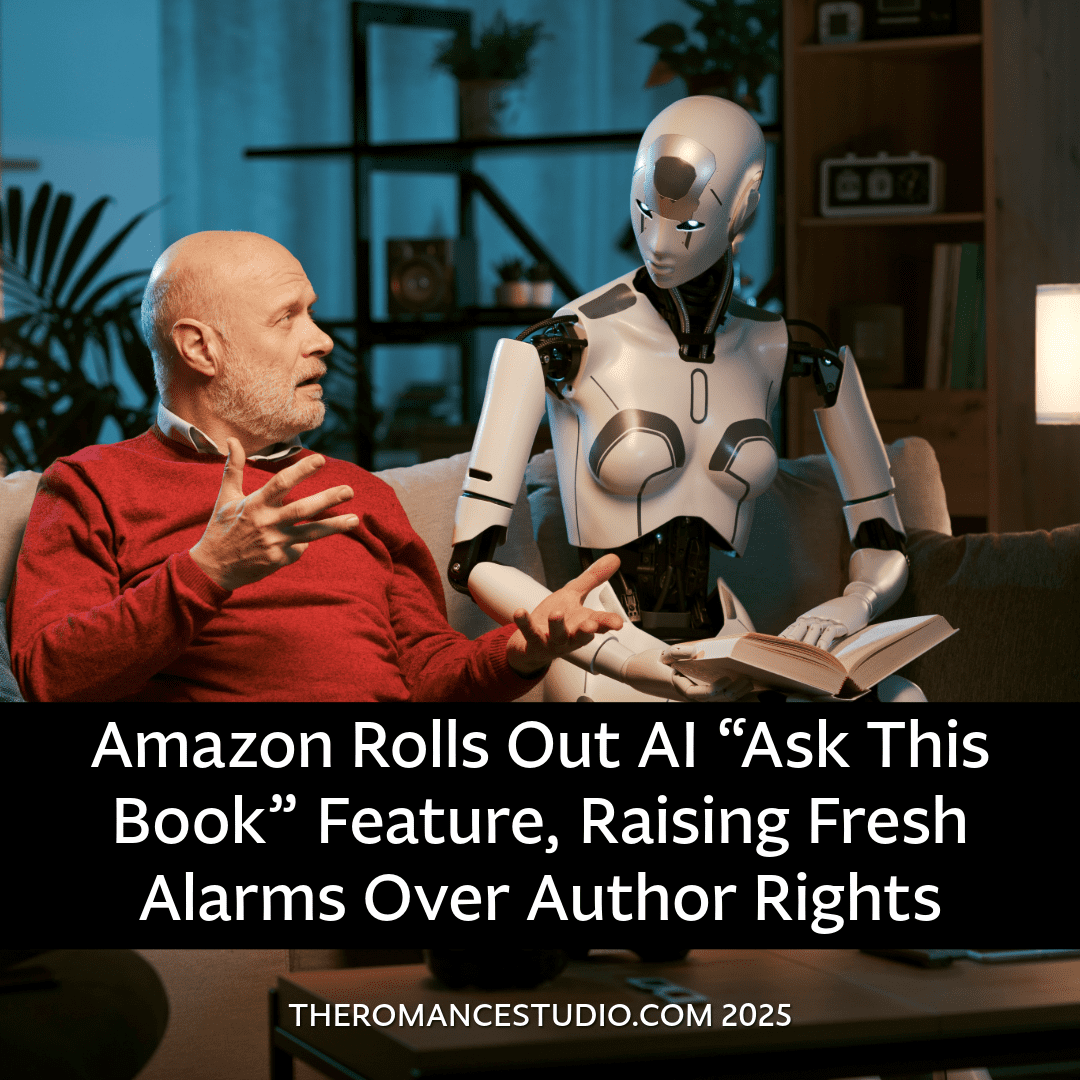
Amazon has opened a new and contentious chapter in the ongoing battle over generative AI and intellectual property, this time inside Kindle books themselves.
Earlier this week, Amazon quietly activated a new feature called “Ask This Book” in the Kindle iOS app, allowing readers to pose questions directly to an AI about the contents of a book they’re reading. The tool delivers spoiler-free explanations of character motivations, plot points, and themes, effectively embedding an AI-powered chatbot inside copyrighted works.
What’s sparked immediate concern across the publishing world is not just what the feature does, but how it was launched: without explicit permission from authors or publishers, and with no option to opt out.
What Is “Ask This Book”?
Amazon first hinted at the feature in October, buried within an announcement focused primarily on updates to Kindle Scribe devices. The company framed it as part of a broader effort to “preserve the magic of reading” through AI-powered tools like “Story So Far” summaries and in-book Q&A.
But “Ask This Book” only went live for U.S. users earlier this week, and with virtually no advance notice.
Readers using the latest Kindle iOS app can now tap on a word or passage, select “Ask,” and submit questions about the text. The AI responds instantly, offering contextual explanations without requiring readers to leave the page.
Amazon spokesperson Ale Iraheta described the tool as an “expert reading assistant,” emphasizing that responses are short, non-shareable, and available only to readers who have legally purchased or borrowed the book.
The Rights Question Amazon Won’t Answer
While Amazon insists the feature provides only factual, spoiler-free responses, it has declined to clarify the legal foundation that allows it to generate AI-driven analysis of copyrighted texts.
More troubling to many in publishing: Amazon confirmed that authors and publishers can’t disable the feature.
“To ensure a consistent reading experience, the feature is always on,” Iraheta stated, adding that there is no mechanism for rightsholders to opt their titles out.
That position directly conflicts with how many authors and agents now treat generative AI rights. Over the past year, publishing contracts have increasingly included language explicitly reserving AI-related uses, particularly anything involving analysis, transformation, or derivative output, for the author alone.
A Familiar Pattern for Kindle Veterans
For industry observers, the rollout feels eerily familiar.
In 2009, Amazon introduced text-to-speech functionality on Kindle devices, arguing that it was “simply software” and not an audiobook, despite effectively reading copyrighted books aloud. Following intense backlash from authors and publishers over audio rights, Amazon reversed course and made the feature optional on a title-by-title basis.
At the time, Amazon maintained it was legally in the clear, but acknowledged that rightsholders should ultimately control how their work is used.
Critics now argue that “Ask This Book” presents an even stronger case for concern, since AI-generated responses could reasonably be considered derivative interpretations of copyrighted material, especially when they analyze themes, character psychology, or narrative meaning.
Publishers Caught Off Guard
Many publishing executives, agents, and author advocates say they were unaware the feature had already launched. One publisher noted they had been vaguely informed months ago that Kindle was “experimenting” with AI features, but expected further notice, and a chance to evaluate, before any public release.
Instead, the feature arrived fully formed.
“It’s not right to be blindsided,” the publisher said. “We weren’t given an opportunity to review the experience or discuss it with our authors.”
Not the Only AI Tool Under Scrutiny
“Ask This Book” is not Amazon’s first AI-driven reading feature. Earlier this year, Kindle introduced “Recaps,” which use AI to summarize previous books in a series. While narrower in scope, that tool also relies on machine analysis of copyrighted text.
In addition, publishers have raised concerns about Kindle’s expanded translation capabilities. What was once limited to short phrases now appears capable of translating up to 1,000 characters at a time. In testing, one publisher found it possible—albeit clumsily—to translate large portions of an ebook, raising fears of backdoor full-text translation without licensing.
Amazon has not yet responded to questions about safeguards or limits on this functionality.
What Comes Next
With authors already pushing back against unauthorized AI training, derivative outputs, and content reuse across the industry, Amazon’s decision to embed an AI chatbot inside Kindle books—without consent—may prove to be a flashpoint.
Many rightsholders argue that even if AI outputs are brief and non-shareable, the act of algorithmic analysis itself crosses a line. At minimum, they say, authors should have the right to review, approve, or reject such features.
As in 2009, Amazon may soon find itself facing mounting pressure to reconsider. Whether it chooses collaboration—or confrontation—will shape not just the future of Kindle, but the boundaries of AI’s role in reading itself.